
Thus, retained earnings are the profits of your business that remain after the dividend payments have been made to the shareholders since its inception. So, each time your business makes a net profit, the retained earnings of your business increase. Likewise, a net loss leads to a decrease in the retained earnings of your business. The level of retained earnings can guide businesses in making important investment re formula decisions. If retained earnings are low, it may be wiser to hold onto the funds and use them as a financial cushion in case of unforeseen expenses or cash flow issues rather than distributing them as dividends. However, if both the net profit and retained earnings are substantial, it may be time to consider investing in expanding the business with new equipment, facilities, or other growth opportunities.
Feeding Schedule for Newborns
- If the result is positive, it means the company has added to its retained earnings balance, while a negative result indicates a reduction in retained earnings.
- The statement of retained earnings is mainly prepared for outside parties such as investors and lenders, since internal stakeholders can already access the retained earnings information.
- For an analyst, the absolute figure of retained earnings during a particular quarter or year may not provide any meaningful insight.
- A second situation in which an adjustment can be entered directly in the RE account and, in this way, bypass the income statement is in the context of quasi-reorganization.
Since cash dividends result in an outflow of cash, the cash account on the asset side of the balance sheet gets reduced by $100,000. Also, this outflow of cash would lead to a reduction in the retained earnings of the company as dividends are paid out of retained earnings. A company’s retained earnings balance can be found on the shareholder’s equity section of the balance sheet (one of the 3 core financial statements), which can be found in the company’s annual report or website. Unlike net income, which can be influenced by various factors and may fluctuate significantly between periods, retained earnings offer a more consistent and reliable indicator of the business’s financial health. A strong retained earnings figure suggests that a company is generating profits and reinvesting them back into the business, which can lead to increased growth and profitability in the future.
Water – Absolute (Dynamic) Viscosity vs. Temperature and Pressure
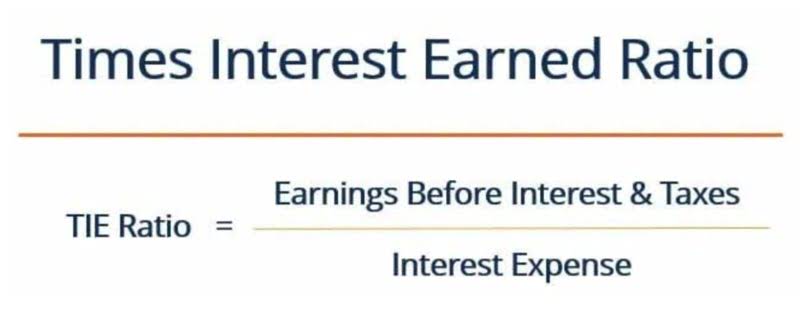
In this regard, ARR does not include the time value of money, where the value of a dollar is worth more today than tomorrow. The accounting rate of return (ARR) formula divides an asset’s average revenue by the company’s initial investment to derive the ratio or return generated from the net income of the proposed capital investment. The accounting rate of return is a capital budgeting metric to calculate an investment’s profitability.
What is your current financial priority?
- Therefore, a company with a large retained earnings balance may be well-positioned to purchase new assets in the future or offer increased dividend payments to its shareholders.
- According to the American Academy of Pediatrics (AAP), babies should be fed when they seem hungry.
- Reinvesting profits back into the business can help it expand and become more successful over time.
- For instance, a company may declare a stock dividend of 10%, as per which the company would have to issue 0.10 shares for each share held by the existing stockholders.
- During the growth phase of the business, the management may be seeking new strategic partnerships that will increase the company’s dominance and control in the market.
- We can find the retained earnings (shown as reinvested earnings) on the equity section of the company’s balance sheet.
In addition to the above methods for measuring returns, there are several other types of formulas. This calculator can be used if density and absolute (dynamic) viscosity of the fluid is known. The calculator is valid for incompressible flow – flow with fluids or gases without compression https://www.bookstime.com/ – as typical for air flows in HVAC systems or similar. The calculator is generic and can be used for metric and imperial units as long as the use of units are consistent. Now, add the net profit or subtract the net loss incurred during the current period, that is, 2019.
- Furthermore, a bulge of atheroma may be the cause of turbulent flow, where audible turbulence may be detected with a stethoscope.
- To naïve investors who think the appropriation established a fund of cash, this second entry will produce an apparent increase in RE and an apparent improved ability to pay a dividend.
- The statement of retained earnings can be created as a standalone document or be appended to another financial statement, such as the balance sheet or income statement.
- You may also want to wait on things that include a mixture of foods, like casseroles, until you’ve introduced those foods separately, especially if you have a family history of food allergies.
- Retained Earnings (RE) are the accumulated portion of a business’s profits that are not distributed as dividends to shareholders but instead are reserved for reinvestment back into the business.
- In the final step of building the roll-forward schedule, the issuance of dividends to equity shareholders is subtracted to arrive at the current period’s retained earnings balance (i.e., the end of the period).
- Finance Strategists has an advertising relationship with some of the companies included on this website.
- In between the opening and closing balances, the current period net income/loss is added and any dividends are deducted.
- Retained Earnings on the balance sheet measures the accumulated profits kept by a company to date since inception, rather than issued as dividends.
- The surplus can be distributed to the company’s shareholders according to the number of shares they own in the company.
- Factors such as an increase or decrease in net income and incurrence of net loss will pave the way to either business profitability or deficit.
If the company had not retained this money and instead taken an interest-bearing loan, the value generated would have been less due to the outgoing interest payment. Retained earnings offer internally generated capital to finance projects, allowing for efficient value creation by profitable companies. However, note that the above calculation is indicative of the value created with respect to the use of retained earnings only, and it does not indicate the overall value created by the company. Retained earnings are the portion of a company’s cumulative profit that is held or retained and saved for future use. Retained earnings could be used for funding an expansion or paying dividends to shareholders at a later date. Retained earnings are related to net (as opposed to gross) income because they are the net income amount saved by a company over time.
Do you already work with a financial advisor?
The beginning period retained earnings appear on the previous year’s balance sheet under the shareholder’s equity section. The beginning period retained earnings are thus the retained earnings of the previous year. Since stock dividends are dividends given in the form of shares in place of cash, these lead to an increased number of shares outstanding for the company. That is, each shareholder now holds an additional number of shares of the company. As mentioned earlier, management knows that shareholders prefer receiving dividends. This is because it is confident that if such surplus income is reinvested in the business, it can create more value for the stockholders by generating higher returns.

Viscous Liquids – Friction Loss vs. Viscosity and Flow
Retained earnings offer valuable insights into a company’s financial health and future prospects. When a business earns a surplus income, it can either distribute the surplus as dividends to shareholders or reinvest the balance as retained earnings. This line item reports the net value of the company—how much your company is worth if you decide to liquidate all your assets. Retained earnings are calculated by subtracting a company’s total dividends paid to shareholders from its net income. This gives you the amount of profits that have been reinvested back into the business. If the company paid dividends to investors in the current year, then the amount of dividends paid should be deducted from the total obtained from adding the starting retained earnings balance and net income.

As shareholders of the company, investors are looking to benefit from increased dividends or a rising share price due to the company’s continued profitability. Investors look at the current year’s and previous year’s retained earnings balance to predict future dividend payments and growth in the company’s share price. Retained earnings can typically be found on a company’s balance sheet in the shareholders’ equity section.
Impact from Net Income
A business entity can have a negative retained earnings balance if it has been incurring net losses or distributing more dividends than what is there in the retained earnings account over the years. At the end of the accounting period, the retained earnings are recorded on the balance sheet as cumulated income from the previous year, including the current year’s net income/lossless dividends paid in the accounting period. This is the amount of retained earnings to date, which is accumulated earnings of the company since its inception. Such a balance can be both positive or negative, depending on the net profit or losses made by the company over the years and the amount of dividend paid.
On the other hand, when a company generates surplus income, a portion of the long-term shareholders may expect some regular income in the form of dividends as a reward for putting their money into the company. Traders who look for short-term gains may also prefer dividend payments that offer instant gains. Retained earnings refer to the historical profits earned by a company, minus any dividends it paid in the past. To get a better understanding of what retained earnings can tell you, the following options broadly cover all possible uses that a company can make of its surplus money. For instance, the first option leads to the earnings money going out of the books and accounts of the business forever because dividend payments are irreversible. Retained Earnings (RE) are the accumulated portion of a business’s profits that are not distributed as dividends to shareholders but instead are reserved for reinvestment back into the business.

No comment yet, add your voice below!