
What is the market cap of all cryptocurrencies
Cryptocurrency mining describes a process where an individual, group of individuals, or a business, will use high-powered computers to solve complex mathematical equations in an effort to validate a block of transactions https://generoustroopers.com/. These mathematical equations are part of the encryption that protects transactions from cybercriminals, as well as other people who shouldn’t have access to sender and receiver data.
As I mentioned earlier, mined cryptocurrencies are created through mining, typically by using computational power. These coins rely on a decentralized network of miners who secure the blockchain and verify transactions. Here’s a breakdown of how it works:
Founded in 1993, The Motley Fool is a financial services company dedicated to making the world smarter, happier, and richer. The Motley Fool reaches millions of people every month through our premium investing solutions, free guidance and market analysis on Fool.com, personal finance education, top-rated podcasts, and non-profit The Motley Fool Foundation.
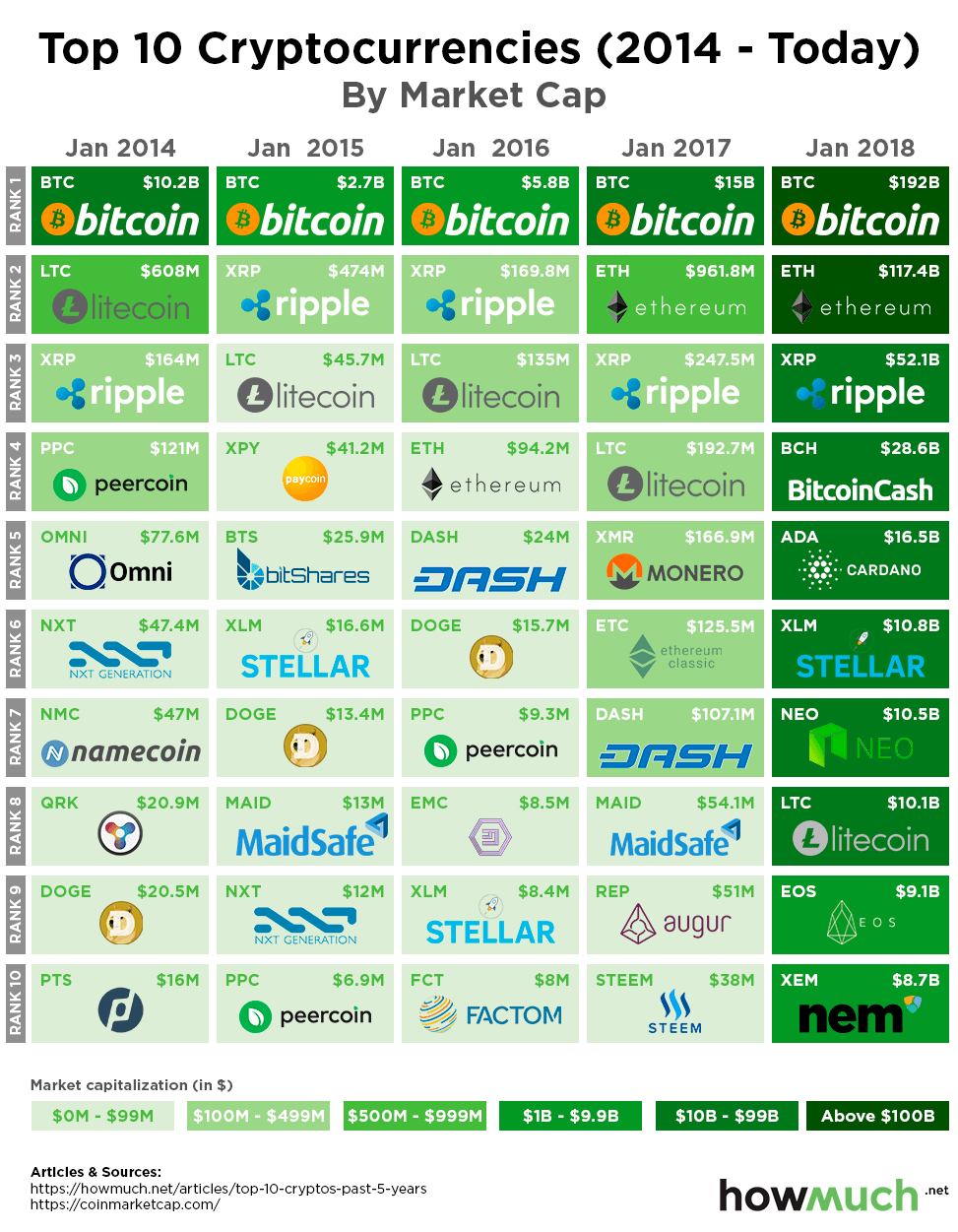
All the cryptocurrencies
Price volatility has long been one of the features of the cryptocurrency market. When asset prices move quickly in either direction and the market itself is relatively thin, it can sometimes be difficult to conduct transactions as might be needed. To overcome this problem, a new type of cryptocurrency tied in value to existing currencies — ranging from the U.S. dollar, other fiats or even other cryptocurrencies — arose. These new cryptocurrency are known as stablecoins, and they can be used for a multitude of purposes due to their stability.
Our Cryptocurrencies and Tokens Table is designed to provide you with the most up-to-date and relevant information about digital assets. In addition to the name, price, 24h change, market cap, circulating supply, and 24h volume, we provide valuable metadata to help you make informed investment decisions. Here’s a breakdown of the different metadata categories:
Our platform features a comprehensive list of all cryptocurrencies and tokens worldwide. Each coin’s page displays its country of origin, allowing you to click through and explore other cryptos and tokens based in that country. Additionally, you can visit our country list page at to find all the cryptocurrencies and tokens sorted by their respective countries.
Each of our coin data pages has a graph that shows both the current and historic price information for the coin or token. Normally, the graph starts at the launch of the asset, but it is possible to select specific to and from dates to customize the chart to your own needs. These charts and their information are free to visitors of our website. The most experienced and professional traders often choose to use the best crypto API on the market. Our API enables millions of calls to track current prices and to also investigate historic prices and is used by some of the largest crypto exchanges and financial institutions in the world. CoinMarketCap also provides data about the most successful traders for you to monitor. We also provide data about the latest trending cryptos and trending DEX pairs.
The total crypto market volume over the last 24 hours is $172.65B, which makes a 34.94% increase. The total volume in DeFi is currently $27.22B, 15.77% of the total crypto market 24-hour volume. The volume of all stable coins is now $161.34B, which is 93.45% of the total crypto market 24-hour volume.
Are all cryptocurrencies based on blockchain
A blockchain is a decentralized ledger of all transactions across a peer-to-peer network. Using this technology, participants can confirm transactions without a need for a central clearing authority. Potential applications can include enterprise blockchain applications, sustainability, tokenization, fund transfers, supply chain tracking and many other areas.
When new data is added to the network, the majority of nodes must verify and confirm the legitimacy of the new data based on permissions or economic incentives, also known as consensus mechanisms. When a consensus is reached, a new block is created and attached to the chain. All nodes are then updated to reflect the blockchain ledger.
Not all blockchains follow this process. For instance, the Ethereum network randomly chooses one validator from all users with ether staked to validate blocks, which are then confirmed by the network. This is much faster and less energy intensive than Bitcoin’s process.
Disclaimer: Our articles are NOT financial advice, we are not financial advisors. All investments are your own decisions. Please conduct your own research and seek advice from a licensed financial advisor.

No comment yet, add your voice below!